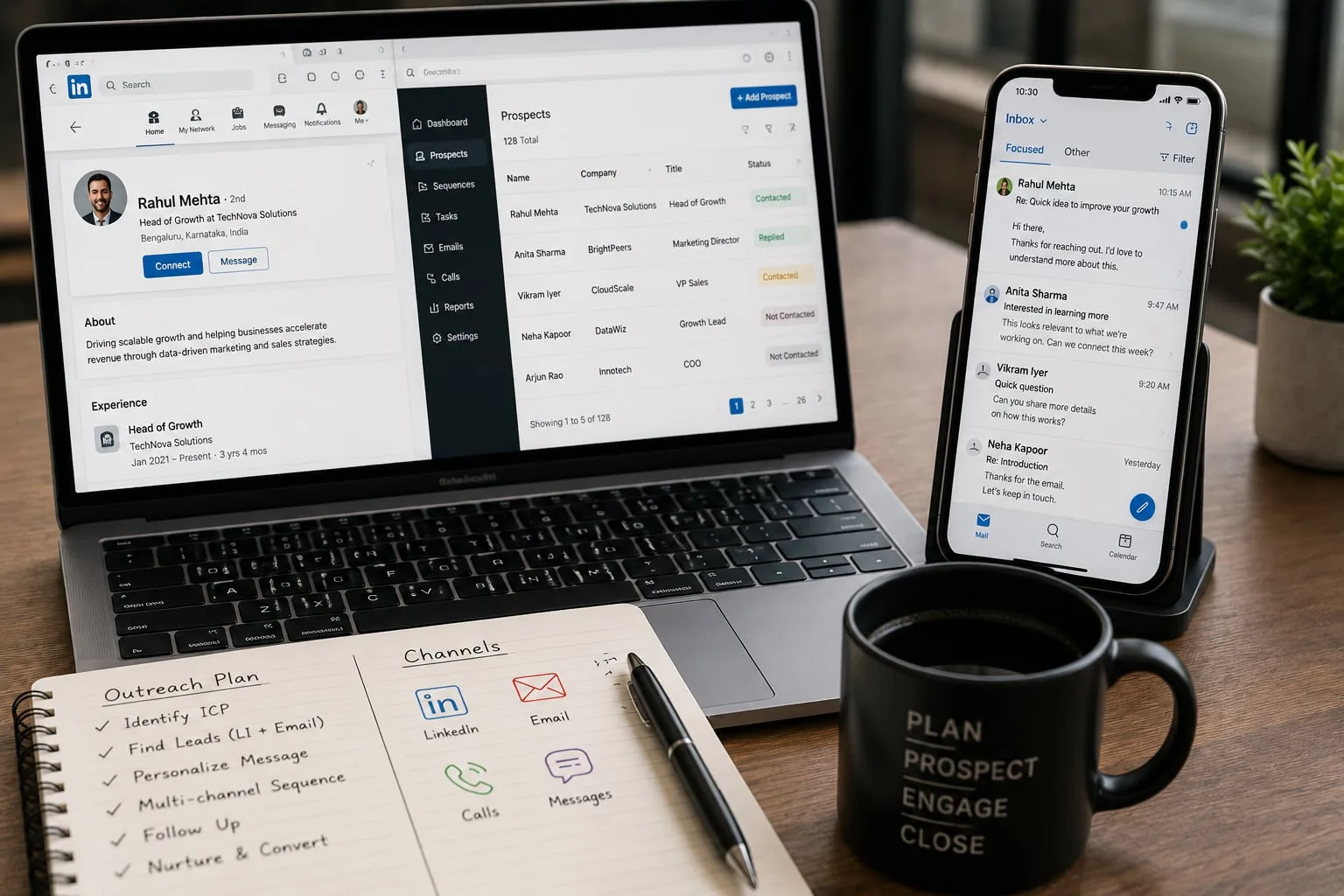
Most B2B lead generation agencies look the same on a pitch call. Here are seven questions that separate the ones that deliver from the rest.
There are hundreds of B2B lead generation agencies. Most of them have the same website. Big pipeline numbers, vague talk about “scale,” and a pricing page that says “contact us.” The pitch call sounds confident. You sign. Three months later you are looking at a dashboard full of emails sent and not many meetings booked.
Not fraud. Not incompetence exactly. Just a mismatch between what the agency sells and what your business actually needs. The seven checks below are what separate agencies that deliver from agencies that pitch well.
1. Ask Who Runs the Account After Onboarding
This is the question most buyers forget to ask. On the pitch call you are talking to a senior person, the founder, a VP, someone with real context and credibility. The question is: who runs your campaigns on a Tuesday morning six weeks in?
The honest answer from most agencies is “a junior account manager or an offshore execution team.” That is not automatically a problem, but you need to know. The briefing quality, copy judgment, and ability to identify why a campaign is underperforming are all significantly different between a senior strategist with B2B sector experience and a junior coordinator following a process.
Ask directly: “Who will be my day-to-day contact after the strategy call? What is their background?” If the answer is vague, that tells you something.
2. Check What They Actually Measure
An agency that reports on emails sent, open rates, and click-throughs is optimising for the wrong thing. Those metrics are easy to inflate and they do not predict pipeline.
The agencies worth working with report on qualified meetings booked, show rate (what percentage of booked meetings actually happen), and pipeline generated in your CRM. These are the numbers that connect to revenue. They are also harder to fake, which is why agencies that are not confident in their results avoid leading with them.
Ask: “What metrics appear in your weekly report? What does a qualified meeting mean specifically, and how is that definition agreed before the campaign goes live?” If the answer includes a lot of activity metrics and not much about meeting quality, move on.
3. Understand What “Qualified” Actually Means
Every agency promises qualified leads. Very few define the word in a way that protects the client.
A qualified meeting should mean: a confirmed calendar booking with a named contact who matches your agreed ICP criteria. Seniority, company size, industry, and any additional filters you specify. Not an expression of interest. Not an out-of-office reply. Not a contact who asked to be followed up “at some point.” A calendar meeting with someone you would actually want to talk to.
Get this definition in writing before signing anything. If the agency is reluctant to commit to a specific definition, that reluctance tells you exactly what their “qualified” pipeline will look like three months in.
The free pipeline audit reviews your ICP, current channels, and what “qualified” should mean for your deal size. 30 minutes. Written plan included.
Book a Free Pipeline Audit4. Look at the Contract Structure
Month-to-month contracts and long-term contracts tell you something different about how an agency thinks about results.
An agency that requires a 6 or 12 month minimum is structuring the relationship to protect their revenue regardless of performance. That is a bad sign. An agency that operates month-to-month is structuring the relationship so that staying is only rational if results are good. That is a better sign.
The question to ask is not “how long is the contract?” but “what happens if we do not see results after 60 days?” The answer tells you whether accountability is built into the engagement or just assumed.
One related point: ask who owns the assets built during the engagement. Prospect lists, sending domains, ad creatives, email sequences. If the agency retains ownership, you are dependent on them by design. If you own everything from day one, you can leave without losing your data.
5. Find Out How They Build Lists
The quality of a cold outreach campaign is determined before a single email goes out. List quality is the most underrated factor in outbound performance.
Agencies that buy generic lead lists from low-quality providers or rely on scraped data produce inflated volume with terrible targeting. The reply rates are low, the spam complaint rates are high, and your domain reputation suffers.
Ask where prospect data comes from. Verified providers like Apollo, Clay, and LinkedIn Sales Navigator, cross-referenced against your specific ICP criteria, produce significantly cleaner lists than bulk data vendors. Ask whether they build a new list for your campaign or use shared or recycled data. And ask how they validate contacts before sending.
A single bounce rate above 3% starts damaging deliverability. Ask what their process is when bounce rates rise.
6. Test Their Knowledge of Your Vertical
A generalist B2B lead generation agency can run campaigns. A specialist one produces better results because they understand your buyers before the first briefing call. They know the objections, the buying triggers, the titles that matter, and the content that earns a reply in your sector.
The easiest test: ask them what they know about your typical buyer’s objections. Ask what triggers usually drive purchasing decisions in your vertical. Ask if they have case studies from clients in your space.
If they can answer those questions with specifics, that is a good sign. If they say “we work across all B2B sectors” without evidence, they are generalists who have not earned your trust yet. That does not disqualify them, but it means you are starting from zero on the learning curve rather than with a head start.
7. Ask About Deliverability Setup
Cold email deliverability is not glamorous, but it is the difference between a campaign that lands in primary inboxes and one that evaporates into spam folders. Most buyers never ask about it, and most agencies do not volunteer information about it until there is a problem.
The infrastructure basics that protect your results: dedicated sending domains separate from your primary business domain, a warmup period of at least 14 days before any campaign volume is sent, daily monitoring of bounce rates and spam complaints, and plain-text or near-plain-text email formatting. Agencies that skip domain warmup or send from your primary domain are taking a risk with your reputation, not theirs.
Ask: “What domains do you use for sending? How long do you warm them up before campaign launch? What happens to my primary domain?” If the answer is unclear, that is a significant operational red flag.
The Honest Summary
The right agency depends on your deal size, your ICP clarity, and which channels make sense for your buyers. If you are still weighing an agency against building in-house or running outbound yourself, the honest cost and risk breakdown is worth reading first, and our solutions by market and vertical page covers programmes built for specific geographies and business models. But the seven things above apply regardless.
None of them are trick questions. They are not meant to be gotchas. An agency that has done this well will answer all seven without hesitation, in specifics, and confirm the important ones in writing. If they get vague on two or more, you have learned something useful before signing rather than after.
The strategy call is usually 30 minutes. That is enough time to ask all seven of these questions. The answers will tell you more than the pitch deck.
Evaluating ConnectLead? The free strategy call covers all of this directly. We review your ICP, recommend which channels make sense for your deal size, and tell you honestly if we are not the right fit. Written campaign blueprint sent after the call. No commitment required.
Frequently Asked Questions
How much should I expect to pay a B2B lead generation agency? Most B2B lead generation agencies charge either a monthly retainer or a per-result model. Retainer models suit companies ready to invest in consistent systematic pipeline. Per-result models suit companies that want to validate the channel before committing. The right model depends on how much pipeline certainty you need and how well-defined your ICP already is. Ask any agency directly how they charge and what accountability is built into each model. The answer tells you more than the pitch deck.
How long before I see results from a B2B lead generation agency? Outbound channels (cold email and LinkedIn) typically generate first qualified replies in week two and confirmed meetings by the end of week three. Paid demand generation can produce results within 7 days of campaign launch. SEO and content marketing is the exception: first meaningful ranking movements typically appear in months three to four. Agencies that promise meaningful SEO results in under 90 days are overpromising.
What should I look for in a B2B lead generation agency’s case studies? Named client vertical, the specific challenge they faced, the channels used, the timeline, and a concrete outcome in numbers. Pipeline generated, meetings booked, reply rates achieved, cost per qualified meeting. Case studies that only describe the process without stating specific results are not case studies. They are capability statements with client names attached.
Is pay-per-lead or retainer better for B2B lead generation? It depends on your pipeline predictability needs and risk tolerance. A performance or pay-per-qualified-meeting model shifts financial risk to the agency and suits companies that need to see ROI before committing to scale. A retainer model suits companies ready to invest in consistent pipeline growth across multiple channels. The question to ask is what the agency is accountable for under each model and whether that accountability matches what you actually need.
What is a realistic reply rate for B2B cold email? For well-targeted sequences in defined verticals, a reply rate of 5 to 8 percent is achievable. The industry average for comparable cold outreach is 1 to 3 percent. Anything above 8 percent is exceptional and worth verifying. Anything below 2 percent on a campaign that has been running for more than four weeks suggests a targeting, copy, or deliverability problem.
Last updated: June 15, 2026